Bitcoin Miners as Water Heaters The Hashtub Revolution
Winter has a way of making every wasted kilowatt feel personal. The electric bill climbs. The gas bill follows. The hot tub still needs heat, the house still needs hot water, and the question becomes obvious: why pay for heat once and then throw away usable heat somewhere else?
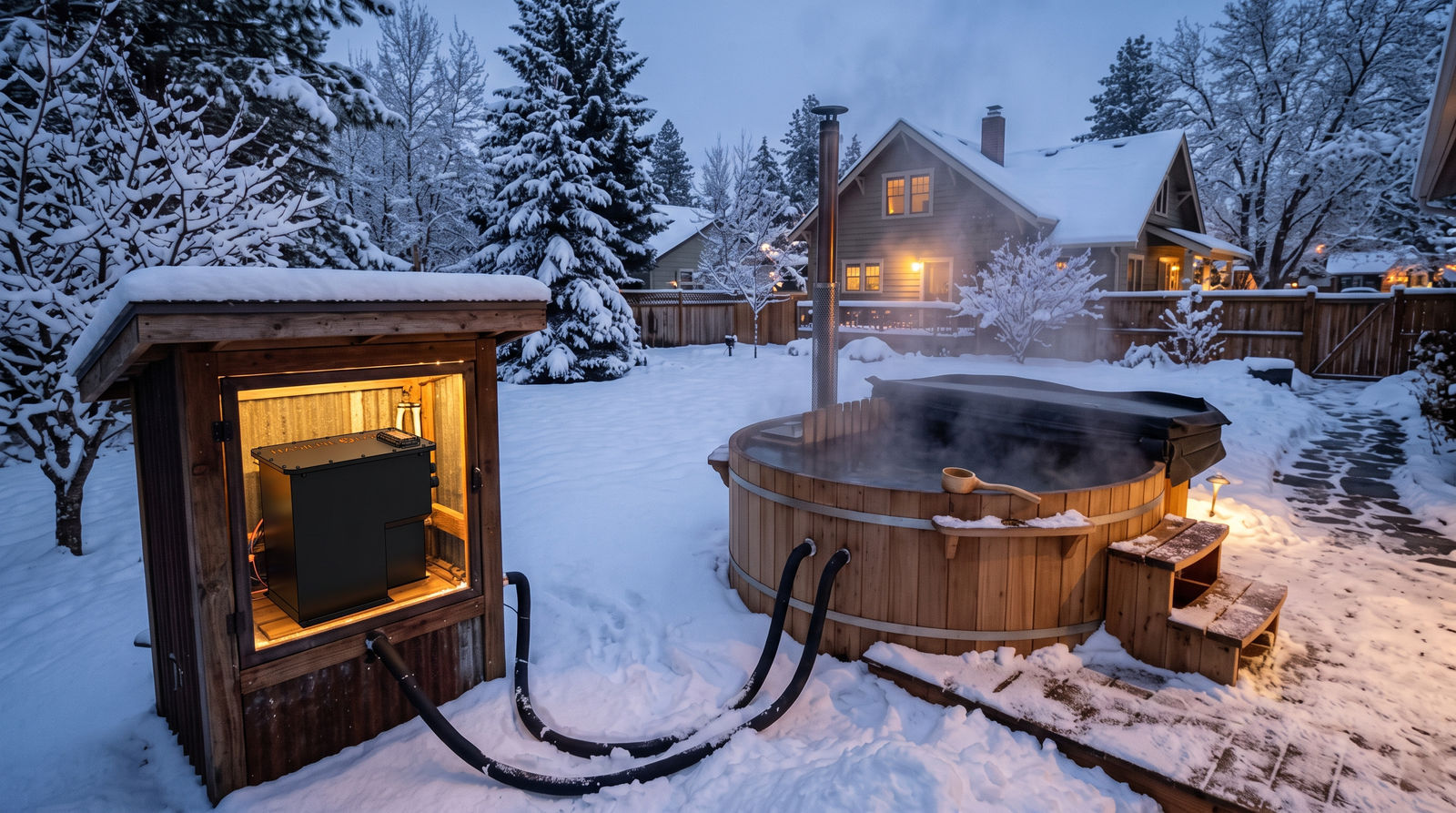
Winter has a way of making every wasted kilowatt feel personal. The electric bill climbs. The gas bill follows. The hot tub still needs heat, the house still needs hot water, and the question becomes obvious: why pay for heat once and then throw away usable heat somewhere else?
That is the problem Bitcoin mining has been quietly solving.
A Bitcoin miner is, at its core, an electric heater that also performs useful work. Every watt that enters the machine becomes heat. In a typical air-cooled setup, that heat gets blasted into a room, vented outside, or treated like a nuisance. In a liquid-cooled setup, the same heat can be captured and moved into water.
That is where the Hashtub comes in.
Hashrate House has teamed up with Snorkel Hot Tubs to create a backyard setup where a liquid-cooled Bitcoin miner acts as the dedicated heater for a hot tub. Instead of sending heat out a window, the system moves thermal energy into the tub’s water loop. The result is simple: warm water, quieter mining, and the chance to earn Bitcoin while using heat that would otherwise be wasted.

Why a Bitcoin miner makes sense as a water heater
Most appliances are built to avoid heat loss. Bitcoin miners are different. They consume electricity to run specialized chips, and the byproduct is heat. In fact, nearly all the electrical energy used by the miner ends up as thermal energy.
That means the question is not whether a miner creates heat. It does.
The better question is whether that heat can be captured, controlled, and used.
With traditional air-cooled ASIC miners, the answer is often “not very well.” Air-cooled miners move a huge amount of hot air with high-speed fans. They are loud, hot, and hard to place inside a home without serious planning. Many air-cooled ASICs can easily exceed 75 decibels, which is closer to a vacuum cleaner than a quiet appliance.
Liquid cooling changes the picture.
Hydro and immersion systems move heat into a fluid instead of blasting it into the room. That fluid can then transfer heat into a water loop, storage tank, radiant floor system, pool, or hot tub. With the right system design, operating noise can drop below 30 dB, which is closer to a whisper than a workshop.
That is the real upgrade. The miner is no longer just a machine that needs ventilation. It becomes a controllable heat source.
How the Hashtub captures mining heat
The Hashtub concept is straightforward. A liquid-cooled Bitcoin miner runs as normal, but instead of dumping heat into the air, it transfers heat into the hot tub’s water system through a safe, purpose-built loop.
The miner and tub do not need to be treated as two separate energy loads. They become one connected system.
Here is the basic flow:
The miner uses electricity to perform Bitcoin hashing.
The mining chips produce heat.
A hydro or immersion system captures that heat in liquid.
A heat exchanger or direct water loop moves the heat into the hot tub system.
The hot tub stays warm while the miner continues earning Bitcoin.
The key is control. A proper system needs water flow, temperature monitoring, safety shutoffs, and plumbing that matches the use case. The goal is not to “hack” a miner into a tub. The goal is to design a heating system where the miner becomes the heat source.
A standard 5,000W hydro setup displaces roughly 17,060 BTU/hr of continuous thermal energy.
That number matters. In heating terms, 5 kW is not small. It is enough heat to maintain many standard hot tubs and can also support domestic hot water applications when the system is designed correctly.

The heat math behind a 5 kW mining setup
The physics are simple enough to understand without turning this into an engineering manual.
One watt of electrical power equals about 3.412 BTU/hr of heat. A 5,000W miner produces about the same thermal output as a 5,000W electric heater.
Input power | Heat conversion | Heat output |
1,000W | 1 kW × 3,412 BTU/hr | 3,412 BTU/hr |
3,000W | 3 kW × 3,412 BTU/hr | 10,236 BTU/hr |
5,000W | 5 kW × 3,412 BTU/hr | 17,060 BTU/hr |
This is why mining heat reuse is so interesting. The miner was going to produce that heat anyway. The difference is whether the heat gets wasted or used.
A conventional electric hot tub heater converts electricity into heat. A mining heater also converts electricity into heat, but it does computation at the same time. If mining revenue covers part of the power cost, the effective cost of heating can fall.
That does not mean the heat is free. Electricity is still being used. Mining returns change based on network difficulty, pool fees, Bitcoin price, hardware efficiency, and local energy rates. This article is informational only and should not be treated as financial advice.
Still, the logic is strong. If heat is needed anyway, and a miner can provide that heat while earning sats, the energy does double duty.
Why water beats air for home mining
Air-cooled mining has been the default for years because it is simple. Plug in a miner, move air through it, exhaust the heat. That works in a warehouse, garage, or shop where noise and hot air are manageable.
In a home, it gets harder.
Hot air is bulky. It is difficult to move cleanly. It leaks into living spaces. It dries rooms out. It also requires large fans, ducting, and vents. The result is noisy (over 80 db) and visually messy.
Water is much better at carrying heat. It can move large amounts of thermal energy through compact pipes. It can be directed into a storage tank, hot tub, or heat exchanger. It also makes the system effectively silent and easier to place because the heat can be moved away from the miner.
That shift opens new use cases:
Hot tubs
Domestic hot water tanks
Radiant floor loops
Pools and spas
Greenhouses
Hydronic space heating systems
A liquid-cooled miner is not just quieter. It is more useful.
What makes the Hashtub different from a regular hot tub
A standard hot tub uses an electric resistance heater or, in some cases, a gas-fired system. The heater’s only job is to raise and maintain water temperature. When it runs, it costs money. When it stops, it earns nothing.
The Hashtub flips that pattern.
The miner becomes the primary heat source. The tub still needs proper controls, filtration, and safe operating limits, but the thermal load comes from the mining system. That makes the hot tub part of the mining operation rather than a separate energy expense.
Regular hot tub
Electricity or gas creates heat only.
Heat is the only output
The utility bill pays for comfort.
Noise depends on pumps and heater system
The heating element is quiet, but it does not earn.
Hashtub setup
Mining creates heat while producing Bitcoin rewards.
Heat has a second purpose
The same energy supports hashing and hot water.
Liquid cooling keeps mining quiet
Hydro or immersion systems can run far quieter than air-cooled ASICs.
This is why the Snorkel Hot Tubs collaboration is so compelling. Snorkel tubs already fit the backyard comfort category. Pairing that experience with Hashrate House liquid-cooled mining creates a setup that feels less like a science project and more like a finished energy system.

Where this fits in the home
The Hashtub is the most eye-catching example, but the same idea applies to other water heating needs.
A domestic hot water tank is one of the most obvious. Most homes use hot water every day for showers, laundry, dishes, and cleaning. A miner tied into a properly designed hydronic loop can preheat or help maintain water temperature.
Space heating is another possibility. In colder months, hydronic heating loops can move heat through floors, radiators, or fan coil systems. A miner can provide a steady base load of heat while it operates.
The best fit depends on the home’s energy use. A hot tub works especially well because it is a steady thermal load. It needs heat throughout the day, especially in cold weather. That consistency pairs nicely with mining, which also works best when it runs steadily.
The most practical setups usually share a few traits:
A clear year-round or seasonal need for heat
Enough electrical capacity for the miner
A safe location for equipment
Plumbing that can support the water loop
Controls that prevent overheating
A plan for service and maintenance
The system should be built around the heat load, not just the miner. If the tub or tank cannot use the heat, the system needs a way to reduce mining output, shed heat safely, or shut down.
What to know before installing one
The Hashtub concept is exciting, but a good installation still needs careful planning. This is electrical equipment, plumbing, heat transfer, and Bitcoin mining all in one system.
Start with power. A 5 kW setup is a serious electrical load. It may require a dedicated circuit, proper breakers, and professional installation. Local codes matter. So does panel capacity.
Next, look at water temperature. Hot tubs must stay within safe limits. Domestic hot water systems also need safe temperature control to reduce scalding risk. A miner can produce continuous heat, so sensors and shutoffs are were built in our system to ensure safe and continuous use.
Noise is another reason to choose liquid cooling. A well-built hydro or immersion system can operate quietly enough for residential spaces, but pumps, enclosures, and placement still matter. Below 30 dB is possible with the right equipment and design, but the whole system needs to support that goal.
Maintenance also matters. Hot tubs need water care. Mining systems need monitoring. Pumps, filters, fittings, coolant, and electrical connections should be easy to inspect. A clean layout makes ownership much easier.
The good news is that none of this is exotic. It is a thoughtful combination of known systems: hydronic heating, hot tub plumbing, electrical service, and Bitcoin mining hardware.
Why this idea is bigger than a backyard spa
The Hashtub gets attention because it is fun. A hot tub heated by a Bitcoin miner is easy to understand. It turns an abstract idea into something physical. Warm water. Quiet equipment. Sats earned in the background. Ultimately swimming in money.
But the bigger point is about energy reuse.
Bitcoin mining often gets discussed only as an electrical load. That misses half the story. In cold climates and water-heating applications, the heat has value. When that heat replaces another heating source, the economics and energy story change.
This does not make every mining project efficient. Poorly placed miners can still waste heat. Bad system design can still create noise, discomfort, or safety issues. But when mining is placed where heat is needed, it becomes a much smarter tool.
The Hashtub is a clear example of that shift. It treats mining heat as an asset.
Frequently asked questions
Can a Bitcoin miner really heat a hot tub?
Yes. A liquid-cooled miner can transfer heat into a hot tub water loop when the system is designed correctly. A 5,000W hydro setup produces about 17,060 BTU/hr, which can be enough to maintain many standard hot tubs.
Is the Hashtub loud?
It is designed to be much quieter than a traditional air-cooled ASIC setup. Air-cooled miners can exceed 75 dB, while Hashrate House hydro or immersion systems can operate below 30 dB with the right build.
Does this make hot tub heat free?
No. The miner still uses electricity. The benefit is that the same electricity produces heat AND Bitcoin mining rewards. Your net cost depends on power rates, miner performance, Bitcoin price, network difficulty, and uptime.
Can the same setup heat domestic hot water?
Yes, the same heat reuse idea can support a hot water tank or hydronic heating loop. The system needs the right heat exchanger, controls, plumbing, and safety equipment for that specific use.
What happens when the water is already hot enough?
A properly designed system should reduce miner output, redirect heat, or shut down when temperatures reach set limits. Temperature control is a core part of safe operation.

A warmer way to stack sats
Heating water is one of the most practical ways to reuse mining heat. It turns a byproduct into something useful, whether that means a hot tub, domestic hot water, or a hydronic heating loop.
The Hashtub brings that idea into a finished backyard experience. By pairing Hashrate House liquid-cooled mining systems with Snorkel Hot Tubs, it captures the heat where it belongs: in the water.
For anyone already paying to keep water warm through the colder months, this is a more interesting question than “How much does mining cost?” The better question is, “What else can that heat do?”
To explore a Hashtub setup or talk through a water-heating mining system for your property, contact Hashrate House.


